

How Much Is My House Worth in Sacramento?
Online estimates are a starting point, not an answer. Here's how Sacramento homes are actually valued, and how to compare a listing with an as-is cash offer by what you keep.
Licensed, verified, and reviewed by Sacramento sellers.
Every credential below links to the proof: the license, the filings, the certifications. The reviews are from real sellers on Google.
4.832 Google reviewsRead the Google reviews
On this page · 10 sections
- 01Where the Sacramento market stands
- 02The four ways homes get valued
- 03Why condition changes everything
- 04As-is value versus after-repair value
- 05Price is not what you keep
- 06A simple worked example
- 07Neighborhood value differs across the region
- 08How to get a number you can trust
- 09Frequently asked questions
- 10Get both numbers from one broker
- regional median sale price, mid-2026
- ~$585K
- typical time on market
- ~33 days
- prices vs. a year earlier
- ~flat
"How much is my house worth?" sounds like a question with one answer. In practice your home has several values at once: what an online estimate says, what an appraiser would write down, what a buyer will pay after inspecting it, and what actually lands in your bank account after everyone is paid. This guide explains each one for a Sacramento-area home, and how to compare a traditional listing with an as-is cash offer by the number that matters most: what you keep.
This guide is general information for Sacramento-area homeowners, not legal, tax, or appraisal advice. Rules change and every property is different, so confirm your own situation with a California real estate attorney, a CPA, or a licensed appraiser before you act.
Where the Sacramento market stands
As of mid-2026, the regional median sale price is roughly $585,000, typical homes go under contract in about 33 days, and prices are close to flat compared with a year earlier (Redfin and regional MLS data). That's a balanced market. Well-priced, updated homes still sell quickly, but buyers have time to compare, ask for repair credits, and walk away from homes that need work.
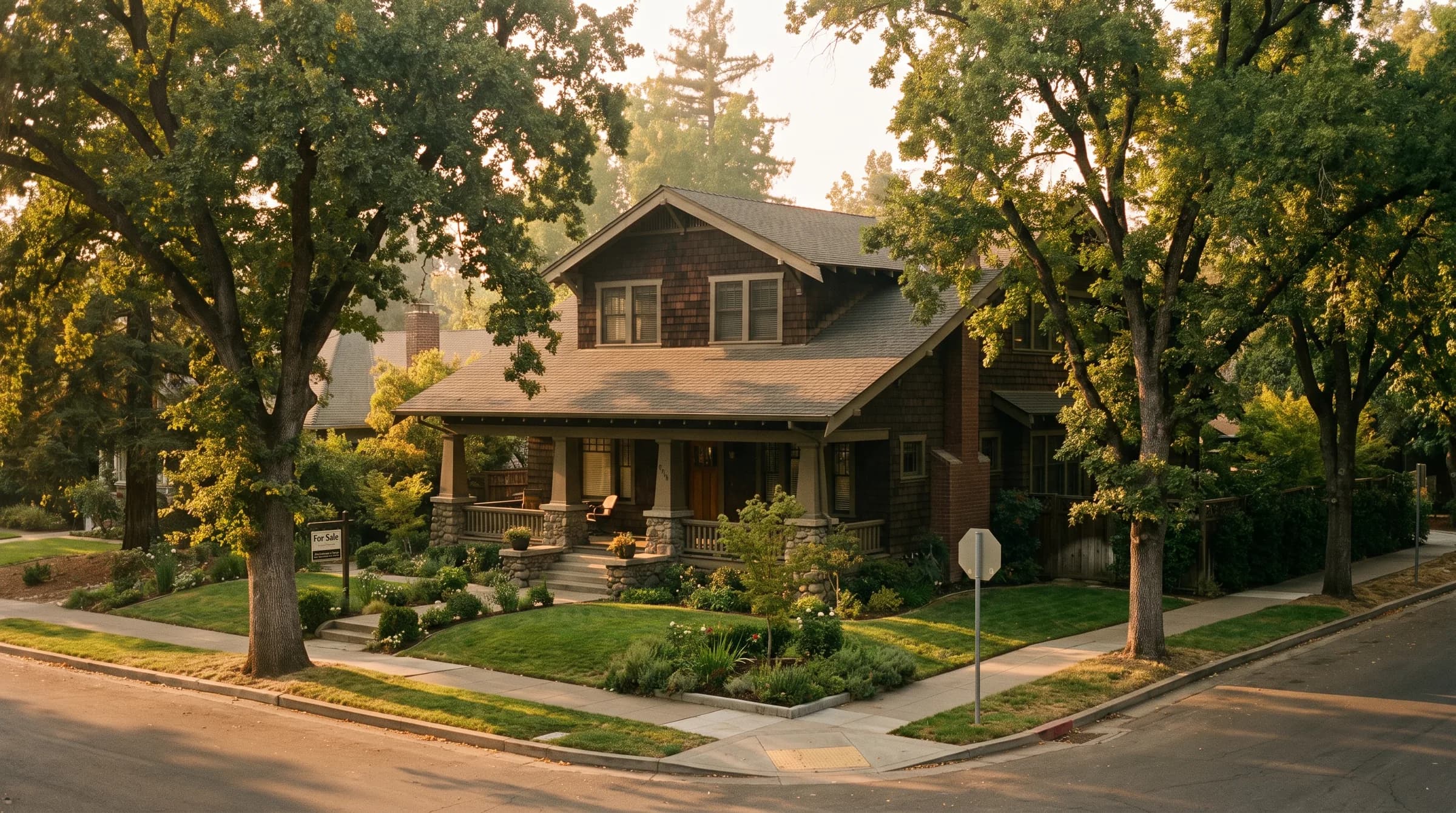
The median hides a wide range. A two-bedroom bungalow in Oak Park, a 1950s ranch in Carmichael, a newer two-story in Elk Grove, and a home near the golf courses in Roseville can differ by hundreds of thousands of dollars. Your value comes from your street, your square footage, and your condition, not the county average.
The four ways homes get valued
1. Comparable sales (comps)
Almost every serious estimate starts with comps: homes near yours that sold recently and are similar in size, age, bedroom count, lot, and condition. A good comp set in Sacramento is usually:
Sold, not listed. Asking prices are wishes. Closed prices are facts.
Recent. Ideally within the last three to six months. In a flat market, older sales still help, but recent ones carry more weight.
Close. Same neighborhood or subdivision where possible. Crossing a major road, a school boundary, or a creek can change values.
Similar condition. This is the one people skip. A fully remodeled house down the street is not a comp for a house with its original 1972 kitchen.
2. Comparative market analysis (CMA)
A CMA is a broker or agent's written opinion of value built from comps, with adjustments for the differences. It's free, it's how most sellers set a list price, and it's only as good as the person doing it. Ask any agent who prepares one to show you the comps and explain each adjustment.
3. Online estimates
Zillow, Redfin, and similar tools run algorithms over public records and recent sales. They're a useful starting point and often reasonably close for updated homes in neighborhoods with lots of similar sales. They tend to miss on:
Homes that need significant repairs, because the algorithm can't see the roof, the foundation, or the 40-year-old electrical panel.
Remodeled homes where the upgrades never showed up in public records.
Unusual properties: large lots, rural parcels, homes with unpermitted additions, or homes on busy streets.
4. Appraisal
An appraisal is a licensed appraiser's formal opinion of value, usually ordered by a buyer's lender. It's the number the loan is based on, so it can make or break a financed sale. Sellers sometimes order their own appraisal when they need a neutral figure, such as for an estate, a divorce, or a sale between family members.
Why condition changes everything
Two houses on the same block can be worth very different amounts because of condition alone. Buyers and lenders price condition in three ways:
Direct cost. A new roof, sewer line, or HVAC system is a known expense, and buyers subtract it, often with a cushion.
Financing limits. FHA and VA loans have property condition standards. Peeling paint on an older home, missing handrails, or a failing roof can stop those loans from closing, which shrinks your buyer pool.
Risk. Unknowns like foundation cracks, old wiring, or signs of water damage make buyers nervous, and nervous buyers offer less or ask for bigger credits.
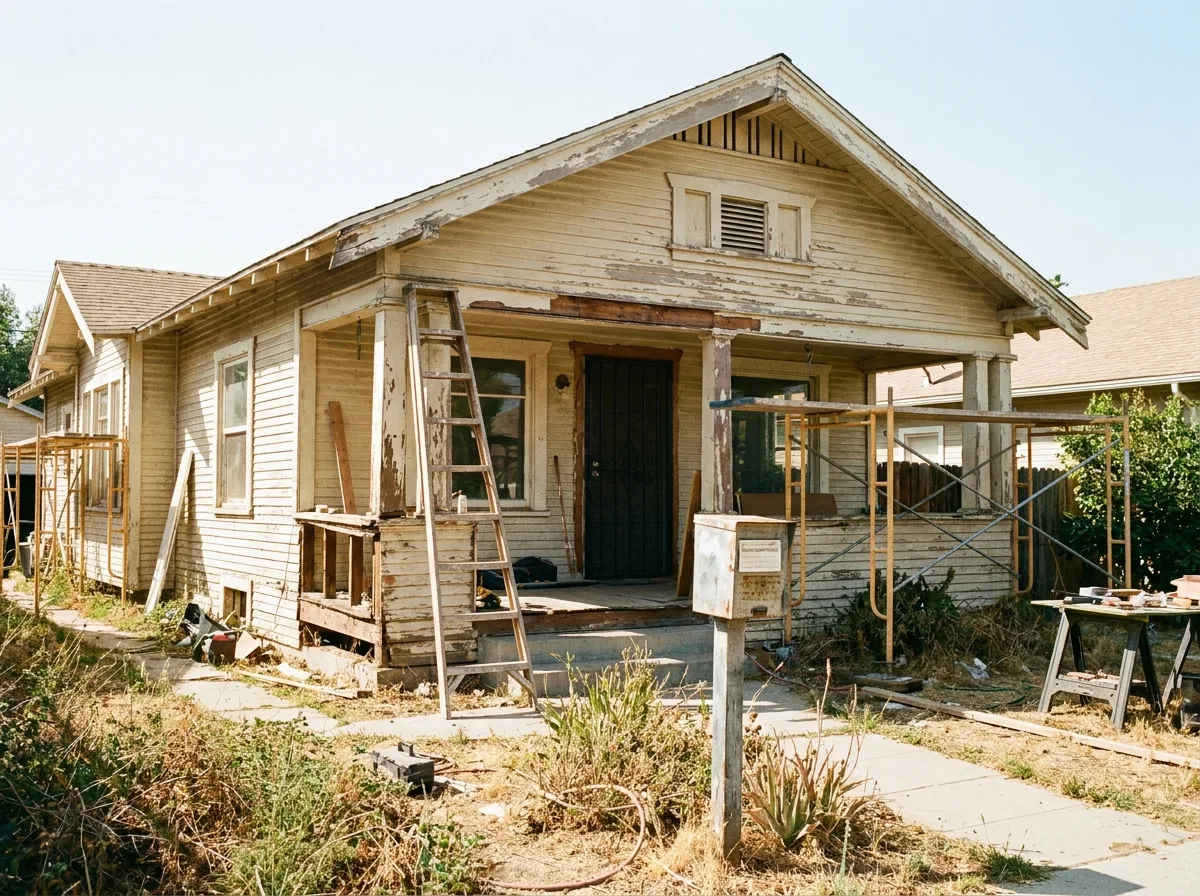
If your home needs work, the honest answer to "what is it worth?" is two numbers: what it would be worth fixed up, and what it's worth as it sits today. Our guide to selling a house as-is in Sacramento covers that gap in detail.
As-is value versus after-repair value
Investors and cash buyers talk about after-repair value (ARV): what the home would sell for once fully updated. They work backward from it:
Start with ARV, based on comps of updated homes nearby.
Subtract the repair budget.
Subtract their costs to hold, finance, and resell the home.
Subtract a margin for their time and risk.
What's left is roughly where a cash offer lands. That's why cash offers come in below ARV, and why it's worth knowing your ARV before you compare offers. If a buyer's repair estimate looks inflated, ask them to walk you through it.
Price is not what you keep
The single biggest mistake sellers make is comparing a cash offer to a list price. The fair comparison is net to net: what you'd walk away with in each scenario.
What comes out of a traditional listing
Commissions. Commissions are negotiable and vary. Since 2024 the rules around buyer-agent compensation have changed, so ask any listing agent exactly what you'd pay and to whom.
Closing costs. Escrow and title fees, a share of the title insurance, recording fees, and prorated property taxes.
Transfer taxes. Sacramento County charges a documentary transfer tax on most sales, and the City of Sacramento charges its own on top of the county's for homes inside city limits. Who pays is negotiable, but it's commonly the seller. Your escrow officer can quote the exact amount for your address.
Repairs and prep. Pre-listing fixes, cleaning, painting, landscaping, and staging.
Buyer credits. In a balanced market, inspection requests and closing-cost credits are routine.
Holding costs. Every month on the market costs mortgage interest, property tax, insurance, utilities, and upkeep. If the home is vacant, add the risk of break-ins and damage.
What comes out of a cash sale
A direct cash sale typically has no commissions, no repairs, no showings, and no inspection renegotiation. Many cash buyers also cover some or all of the closing costs. The offer is lower, but far fewer deductions follow it.
Compare what you keep, on the date you'd actually have it. A higher price that arrives four months later, after repairs and credits, isn't always the better deal.
A simple worked example
Here's how the comparison can play out for a dated 1960s ranch home. The figures are illustrative only, not a quote for any real property.
Listing path. Comps for updated homes nearby suggest about $560,000. The home needs a roof and has an original kitchen, so after inspection a buyer asks for a sizable credit. Add commissions, the seller's share of closing costs and transfer tax, a few thousand in cleaning and paint, and three or four months of mortgage, taxes, insurance, and utilities while it's listed and in escrow.
Cash path. A cash buyer offers less up front, pays the closing costs, takes the home with the roof and kitchen as they are, and closes in a few weeks.
Once every deduction is written down, the gap between the two nets is often much smaller than the gap between the two headline prices. Sometimes the listing still wins clearly; sometimes it barely wins, and the seller decides the time, risk, and hassle aren't worth the difference. The point is to run the numbers for your own home instead of guessing.
Neighborhood value differs across the region
Values and buyer behavior shift a lot from one part of the region to another:
Older central neighborhoods like East Sacramento, Land Park, and Curtis Park carry strong land value. Even dated homes there draw interest, but old plumbing, wiring, and sewer laterals come up in nearly every inspection.
Mid-century suburbs such as Citrus Heights, Arden-Arcade, Fair Oaks, and Rancho Cordova have lots of 1950s to 1970s ranch homes. Original kitchens, roofs, and HVAC systems are common, so condition drives price.
Newer communities in Elk Grove, Natomas, Rocklin, and Lincoln have more uniform housing, which makes comps cleaner and online estimates more reliable.
How to get a number you can trust
Pull three to six recent sold comps within about half a mile and similar in size and age.
Be honest about condition. Walk the house like a buyer would. Note the roof's age, the HVAC's age, the windows, the kitchen, the baths, and anything leaking or cracked.
Get a CMA from a local broker and ask to see their adjustments.
Get an as-is cash offer at the same time, so you can compare both paths with real numbers rather than guesses.
Build a net sheet for each option with your escrow officer or broker.
Frequently asked questions
Why is my Zillow estimate higher than the offers I'm getting? The algorithm usually assumes average condition. If your home needs repairs, buyers price those in and the estimate doesn't.
Should I renovate before I sell to raise the value? Usually only cosmetic work pays for itself. Big projects rarely return their full cost by sale day.
Does a flat market mean I should wait? Nobody can time the market reliably. If your costs to hold the home are high, waiting can cost more than any price change.
Get both numbers from one broker
Darren B. Brown has been a licensed California real estate broker since 1996 (DRE #01295232). He can prepare a market analysis for a traditional listing and make a direct as-is cash offer, then show you the net from each side by side, so you're choosing with real numbers. If you're weighing speed, see how a fast cash sale works, or how a guaranteed sale combines a listing with a firm backstop offer.