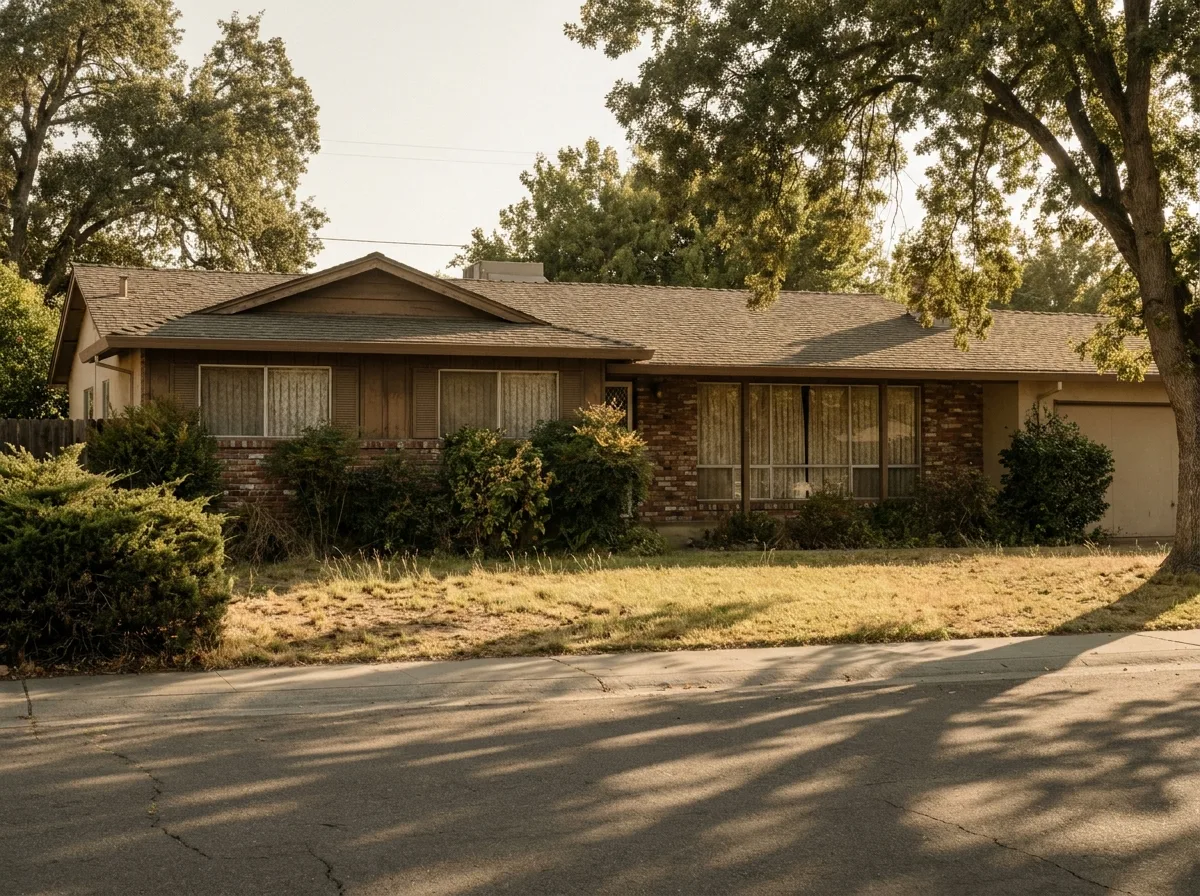


Capital Gains Tax on Inherited Property in California
The number that scares heirs most is usually far smaller than they expect. Here's how the 'stepped-up basis' quietly works in your favor.
Licensed, verified, and reviewed by Sacramento sellers.
Every credential below links to the proof: the license, the filings, the certifications. The reviews are from real sellers on Google.
4.832 Google reviewsRead the Google reviews

On this page · 12 sections
- 01Capital gains in one paragraph
- 02The stepped-up basis
- 03Inherited property is automatically long-term
- 04Community property: the double step-up
- 05How to document the value
- 06Selling right away vs. holding
- 07Property tax is a separate question: Proposition 19
- 08California withholding at closing
- 09Special situations
- 10Common mistakes that cost families money
- 11A quick decision checklist
- 12How Darren helps
A note before the numbers
This is general education, not tax advice. Your situation deserves a quick conversation with a CPA or tax professional, but this will help you walk in knowing the right questions.
Families selling an inherited house often expect a big tax bill. Usually they won't get one. A provision of federal tax law called the stepped-up basis generally resets the house's cost basis to its value when the owner died. If the house sells soon afterward for about that value, there's little or no taxable gain. This guide explains how that works for a California home, the special rule for married couples' community property, what happens if you wait to sell, and the paperwork that protects you.
This guide is general information for Sacramento-area families, not legal or tax advice. Probate and tax rules depend on the details of each estate, so confirm your own situation with a California probate attorney and a CPA.
Capital gains in one paragraph
When you sell property, your taxable gain is roughly the sale price, minus selling costs, minus your basis. For a home you bought, basis is generally the purchase price plus the cost of improvements. If your parents bought their Sacramento house for $90,000 in 1985 and it's worth $585,000 today, their gain on a sale during their lifetime would be roughly the difference. That's large. The question is what basis you get when you inherit it.
The stepped-up basis
Under Internal Revenue Code section 1014, property you inherit generally takes a basis equal to its fair market value on the date of death. The decades of appreciation before that date are never taxed as capital gain.
Using the example above (an illustration, not a quote), suppose the home was worth $585,000 when your parent died and you sell six months later for $595,000, paying $35,000 in selling costs:
Sale price: $595,000
Minus selling costs: $35,000
Minus stepped-up basis: $585,000
Result: a $25,000 loss for tax purposes, not a gain
Without the step-up, the same sale would show a gain of several hundred thousand dollars. That's why a date-of-death value matters so much. The IRS explains basis for inherited property in Publication 551.
Inherited property is automatically long-term
Normally, assets held a year or less produce short-term gains, taxed at ordinary income rates. Inherited property is an exception. It's treated as held long-term no matter how quickly you sell. If there is a federal gain, it qualifies for long-term capital gains rates.
California is different. It doesn't have a separate capital gains rate. Any California gain is taxed as ordinary income at your regular state rate. With the step-up, though, many prompt sales produce little or no state tax either.
Community property: the double step-up
California is a community property state, and that creates a major advantage for married couples. When one spouse dies, both halves of community property can receive a stepped-up basis, not just the deceased spouse's half. That comes from section 1014(b)(6).
Example: a couple bought their home for $150,000 and held it as community property. One spouse dies when it's worth $600,000. The surviving spouse's basis in the entire home generally becomes $600,000. If the home had been held only as joint tenancy, only the deceased spouse's half would typically step up, leaving a basis around $375,000.
How the deed is titled, and whether the property really was community property, can affect this. If a parent was the surviving spouse, ask your CPA whether a double step-up happened at the first death, because it changes the basis for the second.
How to document the value
The burden of proving basis is on you, so get the value in writing:
In probate, the court's probate referee appraises the house as of the date of death. That inventory value is strong evidence of basis.
In a trust or other non-probate transfer, order a retrospective appraisal as of the date of death from a licensed appraiser. It usually costs a few hundred dollars and can save a great deal more.
Keep comparable sales, photos of the home's condition at death, and any broker opinion of value with your tax records.
If the estate files a federal estate tax return, the values reported on it generally must be used for basis. Only large estates file one.
Selling right away vs. holding
The step-up protects the appreciation before death. Anything after death is yours.
Sell soon. The gain is usually minimal. Selling costs often produce a small loss, which in some cases may be deductible against other income. Ask your CPA, because the house has to be treated as investment property rather than personal use.
Rent it out. You can depreciate the building (not the land) starting from the stepped-up basis. When you eventually sell, gain since death is taxable, and depreciation you took is recaptured. See inherited rental properties.
Move in. If an heir makes the home their primary residence and later meets the two-out-of-five-year ownership and use test, the section 121 exclusion may shelter up to $250,000 of gain ($500,000 for many married couples). The parent's years of living there don't count toward the heir's test. The IRS Publication 523 covers the details.
Surviving spouses have extra rules. In some cases a surviving spouse who sells within two years of the death can still use the higher married exclusion. That's a question for your CPA.
Property tax is a separate question: Proposition 19
Capital gains tax and property tax are two different systems. Proposition 19 changed the property tax side for inherited California homes in 2021. Generally, a child can keep a parent's lower assessed value only if the child makes the home their primary residence within a set period, and only up to a value cap. Rentals and second homes don't qualify, and the home is reassessed to market value.
For many families, reassessment changes the keep-or-sell math. A home bought decades ago may have a property tax bill a fraction of what a new owner pays. See the Board of Equalization's Prop 19 page for current rules and filing deadlines.
California withholding at closing
When real estate is sold in California, escrow may be required to withhold part of the sale price (generally 3⅓ percent) for state income tax, unless an exemption applies. Common exemptions include sales with no gain or a loss, which is often true for inherited homes with a stepped-up basis. The seller certifies the exemption on the Franchise Tax Board's form. Your escrow officer handles this. See the Franchise Tax Board for current rules.
Special situations
Several heirs, one house
When siblings inherit a house together, each generally takes a stepped-up basis in their own share. If the house sells and the proceeds are split equally, each heir reports their share of the sale. If one heir buys the others out instead, the selling heirs report a sale of their shares, usually with little gain if it happens soon after death. The buying heir's basis is their own inherited share plus what they paid for the others. See when siblings disagree.
Selling from a trust or estate
If a trust or probate estate sells the house before distributing it, the sale is often reported by the trust or estate rather than the heirs individually. The gain or loss may then pass through to the beneficiaries on a Schedule K-1. It depends on how and when the money is distributed. Your CPA and the estate's tax preparer should coordinate so the sale isn't reported twice or missed entirely.
When the house is worth less than at death
Values can fall. If the home sells for less than its date-of-death value (after selling costs), the result is a loss. Whether that loss is deductible depends on how the house was used after death. A home held purely for sale or investment may produce a deductible capital loss. One an heir lived in for personal use generally won't.
A home with a reverse mortgage
A reverse mortgage doesn't change the basis rules. The heirs still get a stepped-up basis, and the loan is paid off from the sale proceeds like any other lien. If the loan exceeds the home's value, the lender's recovery is generally limited to the home, and the tax treatment of that shortfall is a question for your CPA.
Common mistakes that cost families money
Not getting a date-of-death appraisal. Without it, proving basis years later is harder, and the IRS can challenge a reconstructed value.
Assuming the parent's purchase price is the basis. It usually isn't. Using it overstates the gain and overpays tax.
Gifting the house before death. A lifetime gift generally carries over the giver's original basis, with no step-up. This is one of the most expensive estate planning errors. Families considering it should talk to an attorney first.
Forgetting selling costs. Commissions, escrow and title fees, transfer taxes, and certain repairs made to sell can reduce the gain.
Letting the house sit empty for years. Appreciation after death is taxable, and every month adds carrying costs and vacancy risk.
A quick decision checklist
Get the date-of-death value in writing (referee or retrospective appraisal).
Ask your CPA whether a community property double step-up applies.
Decide whether anyone will live in the home, and check Prop 19 deadlines if so.
Compare the after-tax result of selling now vs. renting vs. moving in.
If selling, have escrow evaluate the withholding exemption.
How Darren helps
Darren B. Brown has been a licensed California real estate broker since 1996 (DRE #01295232). He isn't a tax advisor, but he can give your CPA what they need: a clear picture of the home's value, recent comparable sales, and a realistic net from each way of selling. That includes listing, a direct as-is cash sale, or a guaranteed sale. Many families choose to sell within the first year, when the step-up keeps the tax picture simple.
The step-up is one of the most valuable rules in the tax code for families. Documenting it properly takes an afternoon. Getting it wrong can cost years of headaches.
Related reading: selling an inherited house in Sacramento, the capital gains situation page, and the probate and inherited property hub.