

Sell a house without a surprise tax bill in Elk Grove
A clean cash sale that works with the estate, the attorney, and the court. Close on your timeline.

Licensed, verified, and reviewed by Sacramento sellers.
Every credential below links to the proof: the license, the filings, the certifications. The reviews are from real sellers on Google.
4.832 Google reviewsRead the Google reviews
On this page · 10 sections
- 01Why an Inherited Elk Grove House Rarely Comes With the Tax Bill People Fear
- 02How Stepped-Up Basis Works on a Home Built in the 1990s, 2000s, or 2010s
- 03The Real Cost of Waiting: Appreciation After the Step-Up
- 04What Makes Probate Real Estate in Elk Grove Different
- 05How to Sell a House in Probate in Elk Grove Without Stepping on the Court
- 06Your Real Options When You Inherit an Elk Grove Home
- 07When Several Heirs Share One House
- 08Questions to Bring to Your CPA Before You Sell
- 09Elk Grove Compared With Nearby Communities
- 10Why Families Trust a Local Buyer With an Estate Sale
When you own a house without a surprise tax bill in Elk Grove, a direct sale is often the fastest way out. Darren B. Brown buys inherited and probate homes as-is for cash and works alongside your attorney and the court. Homes around Elk Grove tend to sell above the regional median, and Darren will give you a fair, no-obligation number either way.
- Sacramento-area median sale price (mid-2026)
- $585,000
- Typical time on market for a listed home
- 33 days
- Darren can close in as few as
- 10 days
Stepped-up basis is your friend
Because an inherited home is generally valued at the date-of-death market value, selling soon after often means little taxable gain. Waiting years while it appreciates can create a larger bill.
How selling to Darren works
1. Tell Darren about the property
Call (916) 300-7962 or request an offer online. It takes a few minutes and there is no obligation.
2. Get your offer
Darren reviews the home and makes a fair, no-obligation cash offer, usually within 24 to 48 hours.
3. Close on your date
Pick the closing date that works for you. Darren covers standard closing costs and handles the rest, so you simply collect your proceeds.
What you skip when you sell direct
- No repairs, cleaning, or cleanouts
- No agent commissions or listing fees
- No showings or open houses
- No financing contingencies that fall through
- Close on the date you choose
- Works alongside your attorney and the court
About Elk Grove
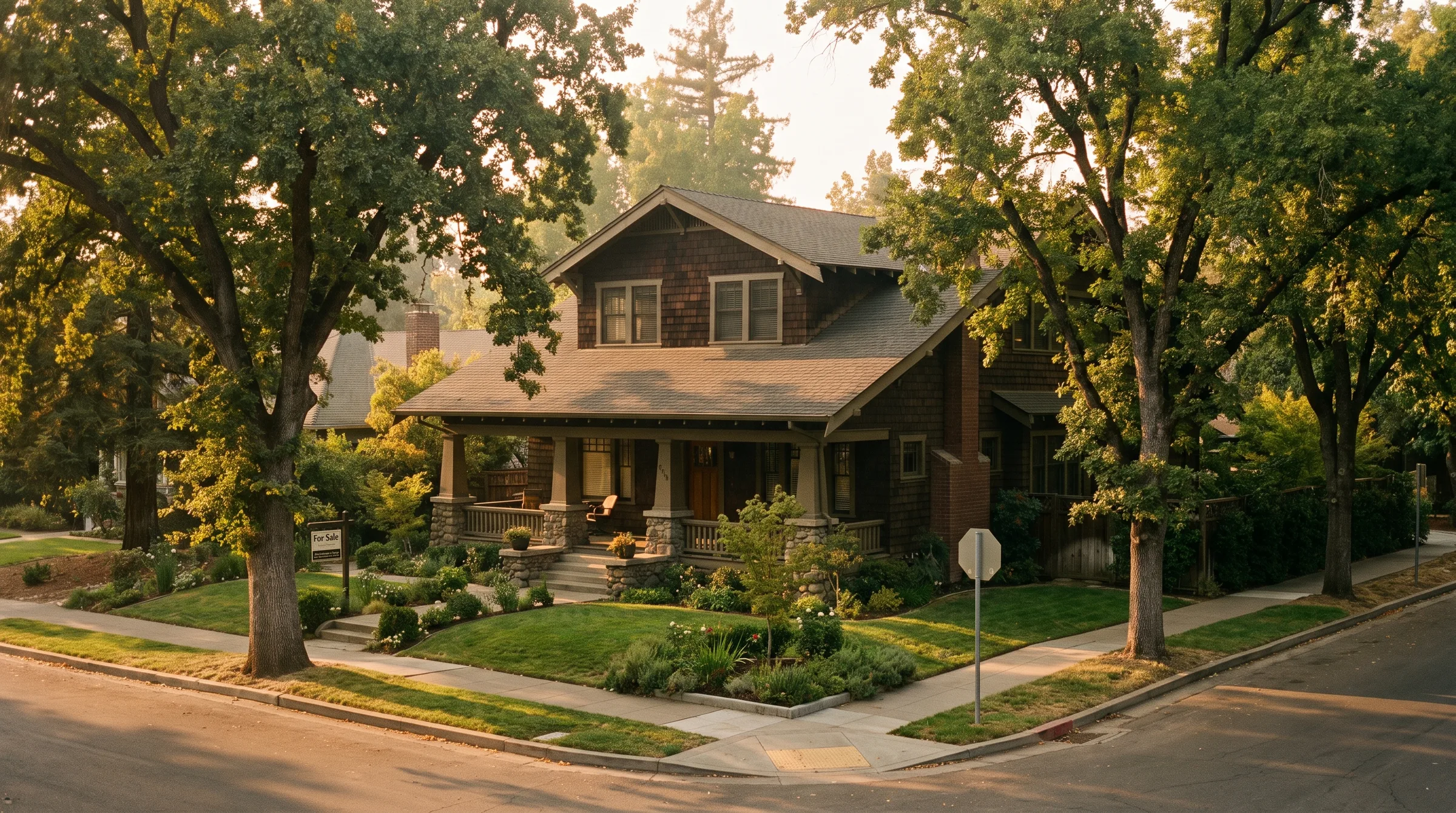
The region's big family suburb — largely 1990s-2010s master-planned subdivisions with newer, larger homes and strong schools. Homes here (95624, 95757, 95758) are largely 1990s-2010s master-planned, and they tend to sell above the regional median. Darren buys across Elk Grove in any condition.
Why an Inherited Elk Grove House Rarely Comes With the Tax Bill People Fear
If you inherited a house in Elk Grove, the capital gains bill is usually far smaller than you expect, as long as you sell reasonably soon after the date of death. That is the short answer, and it is the one most families need to hear first. The reason is a rule called stepped-up basis. An inherited home is generally valued at its market value on the date your loved one passed, not at the price they paid for it years ago. So if your parents bought a new house in a master-planned subdivision in the late 1990s, the decades of appreciation since then generally are not what you get taxed on.
I have been buying houses directly from Sacramento-area owners since 1996, and I have sat at a lot of kitchen tables with grieving families who assumed they would owe a fortune. Most were bracing for the wrong number. What actually matters is the gap between the stepped-up value and what the house sells for. When that gap is small, the taxable gain is small. I am a licensed California broker (DRE #01295232), not your CPA, so I will always tell you to confirm your own situation with a tax advisor. But understanding the basic shape of the rule helps you make calmer decisions about timing, probate, and whether to sell at all.
How Stepped-Up Basis Works on a Home Built in the 1990s, 2000s, or 2010s
Stepped-up basis resets the starting point for measuring gain to the home's value at the date of death. Think about a typical Elk Grove scenario. Much of the city in 95624, 95757, and 95758 was built as master-planned subdivisions between the 1990s and the 2010s, and many original buyers are now the generation whose estates are being settled. A couple who bought a larger, newer home when their neighborhood was first going in may have seen it climb a long way in value. Without the step-up, a child selling it would face tax on all that growth. With it, the slate is largely wiped clean as of the date of death.
The IRS explains how basis is figured in IRS Publication 551 on basis, and it is worth a read if you like seeing the rules in black and white. The practical takeaway is that you want a credible record of what the home was worth when your loved one passed. An appraisal or a well-supported valuation close to that date gives your tax advisor something solid to work from. A fair cash offer received shortly afterward can also help show where the market stood, because the sale price and the stepped-up value end up being close together.
For a deeper walkthrough of the statewide picture, my page on capital gains tax on inherited property in California covers the concepts in more detail. If you want the regional version, I also explain capital gains on an inherited house in Sacramento for families with property across the county.
The Real Cost of Waiting: Appreciation After the Step-Up
Selling sooner can help on taxes, because less appreciation builds up after the step-up. This is the part families often miss. The step-up protects the gain that happened before the date of death. It does not protect what happens after. If the estate holds an Elk Grove house for several years while siblings decide what to do, any rise in value from the date of death to the eventual sale is potentially taxable gain. Homes around Elk Grove tend to sell above the regional median, and the Sacramento-area median sale price was $585,000 in mid-2026, so even modest percentage growth on a larger home can turn into a meaningful number.
Waiting also carries costs that have nothing to do with the IRS. Someone has to pay the property taxes, insurance, utilities, and HOA dues that are common in planned communities. Someone has to keep the lawn alive so the neighbors do not complain and the HOA does not send letters. Someone has to check that the house is secure while it sits empty. Every month adds expense and stress, and in many families it adds tension between heirs who live in different cities and have different ideas about the house.
None of this means you must rush. It means the decision to hold should be an intentional one, made with your CPA, rather than something that happens by default while paperwork drags on. You can read about the federal side of gains in IRS Topic 409 on capital gains, and your advisor can tell you how California treats the same sale.
What Makes Probate Real Estate in Elk Grove Different
Probate real estate in Elk Grove tends to involve newer, larger homes than you find in older parts of the region, and that shapes how a sale plays out. Many of these houses were built in the 1990s through the 2010s, so they often have fewer of the deep structural issues you see in mid-century housing. What they do have is wear that shows up when an elderly owner could not keep up: carpets that need replacing, dated kitchens from the original build, tired landscaping, aging roofs and HVAC systems on the earliest subdivisions, and rooms full of a lifetime of belongings.
Families sometimes assume that because the house is relatively new, listing it will be simple. Then they discover that buyers in strong-school neighborhoods compare every home against freshly updated ones down the street. That pushes heirs toward spending money on paint, flooring, and staging before probate has even released funds. Many HOA communities also have rules about exterior condition, trash bins, and front yards that keep applying while an estate is unsettled.
A direct sale lets you skip that preparation. I buy across Elk Grove in any condition, so the house can stay exactly as your loved one left it. If you are earlier in the process and just trying to understand your options, my page on probate home sales in Elk Grove is a good place to start.
How to Sell a House in Probate in Elk Grove Without Stepping on the Court
You can sell a house in probate in Elk Grove, but the sale has to follow the authority the court has given the executor or administrator. That usually means the personal representative works with the estate's attorney, and depending on how the case is set up, the sale may need court confirmation or may proceed with less court involvement. I do not give legal advice, and your attorney will tell you which path applies. What I do is work alongside your attorney and the court, on their timeline, so the buyer side never becomes the thing that slows the estate down.
That matters more than people realize. In a traditional listing, a buyer's loan can fall apart weeks into the process, and in a probate sale that can mean starting over on court steps. A cash buyer removes the financing risk. I can close in as few as 10 days when the paperwork allows, or I can wait patiently through a longer court schedule. You choose the closing date, and the deal stays steady either way.
Once the sale closes, the deed is recorded with the county. If you need to look up recorded documents on the property, including the deed your loved one held, the Sacramento County Clerk-Recorder is the office that maintains them. For a step-by-step look at the estate side of things, see my guide to selling a house during probate in Elk Grove.
Your Real Options When You Inherit an Elk Grove Home
When you inherit an Elk Grove house, you generally have three paths: keep it, list it with an agent, or sell it directly. Each has honest trade-offs, and the right one depends on your family, your finances, and how much time and energy you have to give the property. I would rather you choose well than choose me, so here is how I think about each.
Keeping the home can make sense if an heir wants to live there, especially in a family suburb known for strong schools. Renting it out is another version of keeping it, but it brings landlord duties, HOA rules on rentals in some communities, and the post-step-up appreciation issue we talked about. If you plan to keep it, have your tax advisor walk you through what holding means long-term. Property tax reassessment is another issue for inherited homes in California, and the Board of Equalization's Prop 19 guide explains how the rules apply to transfers between parents and children.
Listing with an agent can bring a strong price, since Elk Grove homes tend to sell above the regional median. The trade-off is preparation, showings, commissions, and time. A typical listed home takes 33 days on market, and that is before escrow and before any probate steps. Selling directly to me means a fair cash offer, usually within 24 to 48 hours, with no repairs and no showings. For many estates, the certainty and speed are worth more than chasing the last dollar, especially when several heirs need closure.
When Several Heirs Share One House
When siblings or other relatives inherit a house together, the hardest part is often agreement, not the sale itself. One heir lives nearby in Laguna or off Elk Grove Boulevard and has been checking on the house. Another lives out of state and wants the money settled. A third has emotional ties to the home where they grew up. Those are all reasonable positions, and they can stall an estate for a long time.
A clear, no-obligation cash number gives everyone the same fact to discuss. It replaces guessing about what the house might bring after repairs and months on market with an actual offer on the house as it stands. Some families use my offer to decide to sell. Others use it as a benchmark while one heir buys out the rest. Either way, a real number tends to lower the temperature.
Because I buy as-is, nobody has to argue about who pays for new carpet or who spends weekends clearing the garage. Heirs can take the items that matter to them and leave the rest. For more on that side of the process, my page on selling an inherited house in Elk Grove covers what families typically face.
Questions to Bring to Your CPA Before You Sell
The best way to avoid a surprise tax bill is to talk with your tax advisor before you sign anything, not after. I see families who are relieved by stepped-up basis and families who are surprised by details they never asked about. A short conversation beforehand usually prevents the second outcome. California has its own income tax rules, and the California Franchise Tax Board is the authority on the state side of a sale.
Here are the questions I suggest bringing to that meeting, so your advisor can give you answers specific to your family:
What is the stepped-up value as of the date of death, and what documentation supports it?
Is the house owned by the estate, a trust, or the heirs directly, and who reports the sale?
How much appreciation has built up since the date of death, and how would selling now compare with selling later?
Are there selling costs or estate expenses that affect the gain calculation?
If one heir keeps the house, how do property tax reassessment and Prop 19 affect them?
How should proceeds be distributed among heirs, and when?
Elk Grove Compared With Nearby Communities
The tax rules work the same way across the region, but the houses do not, and that changes how a sale feels. Elk Grove is the region's big family suburb, mostly 1990s to 2010s master-planned neighborhoods with newer, larger homes. Because those homes tend to sell above the Sacramento-area median, the dollar amounts in an estate are often larger, and getting the timing right after the step-up can matter more in real terms.
Families with property elsewhere face different conditions. Older housing to the north often brings deferred maintenance and longer ownership histories, which I cover on my page about capital gains on an inherited house in South Sacramento. To the south, a more rural setting brings its own considerations, explained in my guide to capital gains on an inherited house in Galt. Plenty of estates include homes in more than one of these places, and I buy throughout the greater Sacramento area, so one conversation can cover all of them.
Why Families Trust a Local Buyer With an Estate Sale
Selling an inherited house is personal, and it deserves a buyer who is local, licensed, and accountable. I am a retired Air Force veteran and have bought houses directly from Sacramento-area owners for more than 30 years. I am not a middleman flipping your contract to someone else or a national buyer who has never driven down your street. When I make an offer on an Elk Grove home, I know the neighborhoods and what these houses are worth.
My approach is simple. I listen to your situation, look at the home, and give you a fair, no-obligation number. If listing makes more sense for your family, I will tell you. If a direct sale fits, I cover standard closing costs, work with your attorney and the court, and close on the date you choose. If you want to sell an inherited house in Elk Grove and avoid a surprise tax bill, call me at (916) 300-7962 and we can talk it through. You can also browse my full overview of probate and inherited home sales whenever you are ready.