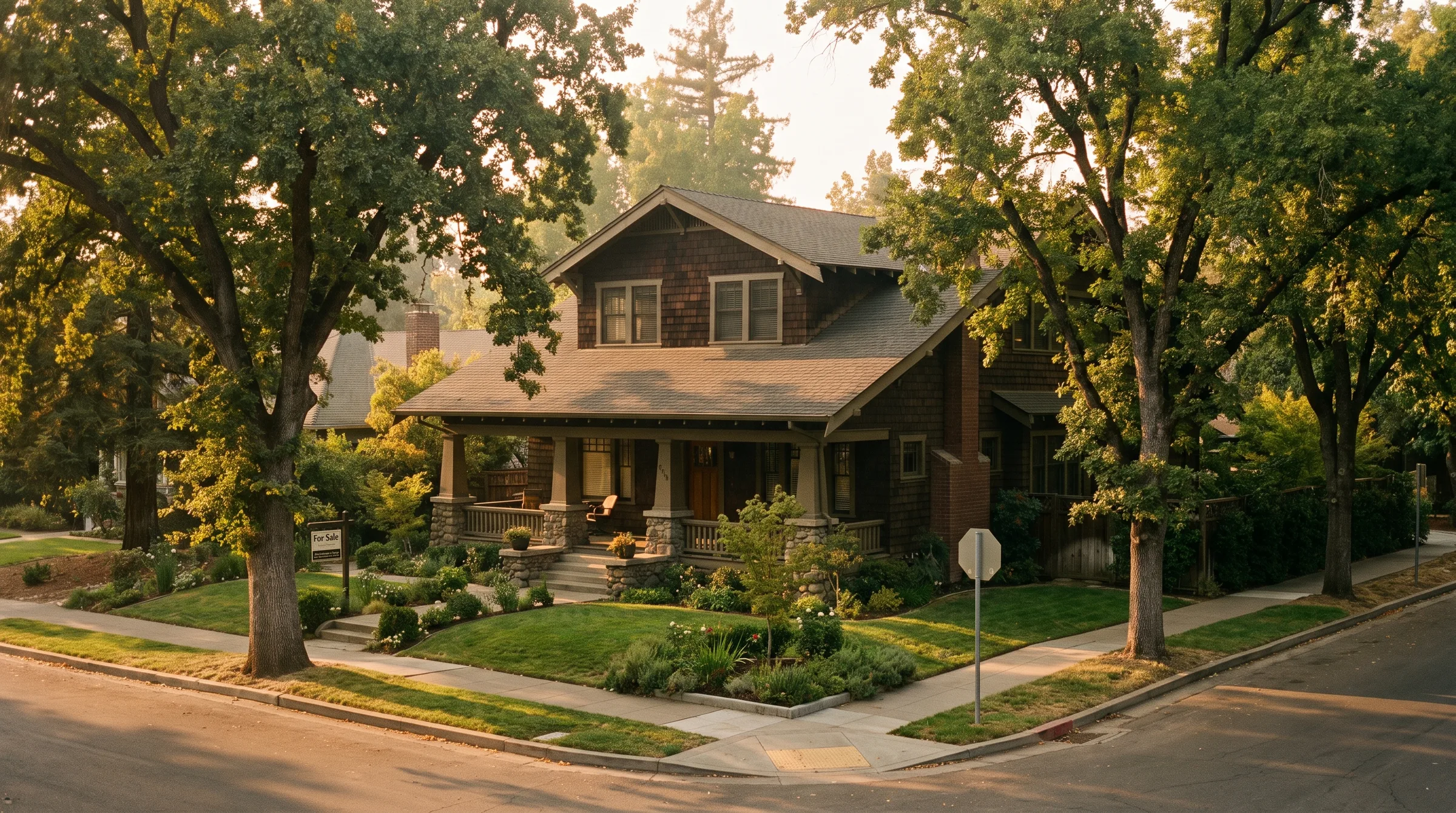


Sell a house without a surprise tax bill in Fruitridge
A clean cash sale that works with the estate, the attorney, and the court. Close on your timeline.

Licensed, verified, and reviewed by Sacramento sellers.
Every credential below links to the proof: the license, the filings, the certifications. The reviews are from real sellers on Google.
4.832 Google reviewsRead the Google reviews
On this page · 10 sections
- 01What a capital gains worry really means for an inherited Fruitridge house
- 02Why the stepped-up basis matters so much in 95820 and 95824
- 03How waiting can quietly create the tax bill you were afraid of
- 04Selling a house in probate in Fruitridge without stalling the estate
- 05The real condition of older Fruitridge homes and why it affects your choices
- 06Weighing a traditional listing against a direct cash sale
- 07Questions to bring to your CPA before you sell
- 08Keeping the house versus selling it, and where Prop 19 fits in
- 09How Fruitridge compares with nearby south Sacramento neighborhoods
- 10What working with Darren looks like for a Fruitridge estate
A house without a surprise tax bill in Fruitridge can be hard to sell the traditional way. There is a simpler path. Darren B. Brown buys inherited and probate homes as-is for cash and works alongside your attorney and the court. Homes around Fruitridge tend to sell below the regional median, and Darren will give you a fair, no-obligation number either way.
- Sacramento-area median sale price (mid-2026)
- $585,000
- Typical time on market for a listed home
- 33 days
- Darren can close in as few as
- 10 days
Stepped-up basis is your friend
Because an inherited home is generally valued at the date-of-death market value, selling soon after often means little taxable gain. Waiting years while it appreciates can create a larger bill.
How selling to Darren works
1. Tell Darren about the property
Call (916) 300-7962 or request an offer online. It takes a few minutes and there is no obligation.
2. Get your offer
Darren reviews the home and makes a fair, no-obligation cash offer, usually within 24 to 48 hours.
3. Close on your date
Pick the closing date that works for you. Darren covers standard closing costs and handles the rest, so you simply collect your proceeds.
What you skip when you sell direct
- No repairs, cleaning, or cleanouts
- No agent commissions or listing fees
- No showings or open houses
- No financing contingencies that fall through
- Close on the date you choose
- Works alongside your attorney and the court
About Fruitridge
An older, modest south-city area of compact homes along the Fruitridge corridor. Homes here (95820, 95824) are largely 1940s-1960s, and they tend to sell below the regional median. Darren buys across Fruitridge in any condition.
What a capital gains worry really means for an inherited Fruitridge house
If you inherited a house in Fruitridge, the tax bill you fear is usually much smaller than you expect, as long as you sell reasonably soon after the date of death. That is the short answer, and it is worth sitting with for a moment, because a lot of families delay a sale for years out of worry about taxes, and the delay itself is often what creates the bigger bill.
Here is why. When someone passes and leaves a home to their heirs, the home is generally valued at its market value on the date of death. That value becomes your starting point, which tax people call your basis. If you sell close to that value, there is often little or no taxable gain on paper. The decades of appreciation your parent or grandparent enjoyed while living in that little 1950s house off Fruitridge Road are, in most cases, not your problem.
I am Darren B. Brown, and I have been buying houses directly from Sacramento-area owners since 1996. I am a licensed California broker (DRE #01295232) and a retired Air Force veteran. I am not your tax advisor, and I will always tell you to confirm the details with a CPA. What I can do is explain how this plays out on the ground in Fruitridge and give you a fair, no-obligation cash number so you can weigh your options with real figures in hand.
Why the stepped-up basis matters so much in 95820 and 95824
The stepped-up basis matters most in places where a home was bought long ago for very little, and Fruitridge is exactly that kind of place. Homes across 95820 and 95824 are largely 1940s to 1960s construction, compact houses built for working families along the Fruitridge corridor. Many of them were bought by their original owners or by second owners decades ago at prices that seem almost unreal today.
If your parent had sold that house while living, the gap between what they paid and what it sold for could have been large. Because you inherited it, though, the clock generally resets to the date-of-death value. The IRS Publication 551 on basis lays out how basis works for inherited property, and it is worth having your CPA walk you through it with your actual numbers.
The practical takeaway for a Fruitridge family is simple. The step-up is doing most of the heavy lifting for you right now. Every month the house sits and appreciates, a little more potential gain builds on top of that reset value. Selling soon after the date of death keeps the gap small. Waiting years can quietly turn a near-zero gain into a real bill, which is the surprise this page is trying to help you avoid.
How waiting can quietly create the tax bill you were afraid of
Holding an inherited home for years is the most common way families end up with a capital gains bill they did not see coming. It rarely happens on purpose. Usually the house sits because nobody is ready to clear out Mom's things, siblings cannot agree, or someone plans to fix it up first and never quite gets to it.
Meanwhile, the home keeps its date-of-death basis while its market value can drift upward. When you finally sell, any increase above that date-of-death value is gain. For a general overview of how gains are taxed federally, IRS Topic 409 on capital gains is a good, plain starting point. California has its own rules too, and the California Franchise Tax Board is where state income tax questions get answered officially.
There is also a cost to waiting that has nothing to do with taxes. An empty older Fruitridge house still needs insurance, utilities, lawn care, and someone to check on it. Vacant homes on the south side of the city can attract break-ins or squatters. So a quicker sale can help on two fronts: less appreciation accruing after the step-up, and fewer carrying costs and headaches. Your CPA can confirm how timing affects your specific situation.
Selling a house in probate in Fruitridge without stalling the estate
You can sell a house in probate in Fruitridge, and a direct buyer who understands the court process can make it far less stressful. Probate real estate in Fruitridge often moves on the estate's timeline, not a typical buyer's, and that mismatch is where many traditional sales fall apart.
When I buy a probate or inherited home, I work alongside the estate's attorney and, when required, the court. I am not trying to rush anyone past a step they need to take. Instead, I give the executor or administrator a firm cash offer that does not depend on a lender, so the estate is not waiting on an appraisal or watching a buyer's financing collapse at the last minute. If you want more detail on how that works locally, see my page on selling a house during probate in Fruitridge.
Recordings, deeds, and other property records for Sacramento County run through the Sacramento County Clerk-Recorder, and your attorney will know which documents matter for your estate. My role is to be a dependable buyer who shows up, honors the number, and closes on the date that works once the paperwork allows.
The real condition of older Fruitridge homes and why it affects your choices
Most inherited Fruitridge homes need some work, and that reality shapes whether a traditional listing or a direct sale makes more sense. A house built in the late 1940s or 1950s and lived in by one owner for decades often has original wiring, older plumbing, tired roofs, single-pane windows, and kitchens that have not changed since the 1970s.
On the open market, those details turn into inspection reports, repair requests, and lender conditions. A buyer using financing may need certain items fixed before the loan funds. That means the estate either spends money on repairs, which can be hard when cash is tied up, or renegotiates and hopes the deal survives. Each round adds time, and as we have covered, time can work against you on taxes.
I buy across Fruitridge in any condition, as-is. You do not have to repair the roof, update the electrical panel, or haul out a lifetime of belongings from the garage. Homes around Fruitridge tend to sell below the regional median, which is $585,000 for the Sacramento area as of mid-2026, so I will give you an honest number based on what this particular house is, not what it might be after a remodel nobody wants to manage.
Weighing a traditional listing against a direct cash sale
A traditional listing can bring a higher top-line price in some cases, while a direct sale trades a bit of that upside for speed, certainty, and simplicity. Neither is right for everyone, and I would rather you choose with clear eyes than feel pushed.
A listed home in the Sacramento area typically sits for 33 days on the market, and that is before escrow, inspections, and any probate steps. Add commissions, repair credits, cleanout costs, and carrying costs on an empty house, and the net difference between a listing and a direct offer is often smaller than families assume. I can close in as few as 10 days when the estate is ready, and I cover standard closing costs.
Here is my honest advice. Get my number, and if you want, get a listing agent's estimate too. Compare what you would actually walk away with, not just the headline price. Factor in how long each path takes and how that timing could affect your gain above the stepped-up basis. If the listing wins for your family, that is a fine outcome. If the simpler path wins, I am ready.
Questions to bring to your CPA before you sell
The best way to avoid a surprise tax bill is to walk into your CPA's office with the right questions already written down. I am not giving tax advice, but after three decades of buying inherited homes I have seen which questions families wish they had asked earlier.
These are good starting points for your conversation, and none of them require you to have decided on a buyer yet:
What was the home's fair market value on the date of death, and how should we document it?
How much could the home appreciate if we hold it another year or two, and what would that mean for our gain?
Are selling costs deductible from the gain, and which ones count?
How are proceeds split and reported if several siblings inherited together?
Does anyone plan to move in, and how would Prop 19 affect property taxes if we kept it?
Keeping the house versus selling it, and where Prop 19 fits in
If someone in the family is thinking about keeping the Fruitridge house rather than selling, property taxes become part of the decision alongside capital gains. California changed how parent-to-child transfers are treated for property tax purposes, and the Board of Equalization's Prop 19 guide explains the rules in official terms.
This matters because a family member may picture keeping the house at the parent's old tax bill, only to learn the situation is different. Combined with the cost of updating a 1950s home and the risk of appreciation building above the stepped-up basis, keeping it is not always the bargain it first appears to be. For a broader view of state rules, my page on capital gains tax on inherited property in California pulls the main ideas together.
I never pressure a family to sell a home someone genuinely wants to live in. But if nobody plans to move in, holding it as a placeholder while everyone thinks it over is usually the most expensive choice, quietly, on several fronts at once.
How Fruitridge compares with nearby south Sacramento neighborhoods
Fruitridge shares a lot with neighboring south-city areas, but its modest price point and older housing make the stepped-up basis especially valuable here. Because homes tend to sell below the regional median, the dollar amounts involved are often smaller, and families sometimes assume taxes are not worth thinking about. That is a mistake only if you wait.
If you have family property in more than one neighborhood, the same principles apply with local differences. You can read about capital gains on an inherited house in Oak Park, where older homes and changing values create their own timing questions, or capital gains on an inherited house in Florin, just to the south. The Sacramento-wide overview on capital gains for inherited Sacramento homes is also helpful.
Wherever the house sits, the core idea holds steady. The date-of-death value is your starting line, and selling sooner keeps the distance between that line and your sale price short.
What working with Darren looks like for a Fruitridge estate
Working with me is meant to be calm and straightforward, especially for a family already grieving and juggling an attorney, a court, and a house full of memories. You can call me at (916) 300-7962 or request an offer online. I will look at the home, ask a few questions about the estate's timeline, and give you a fair, no-obligation cash offer, usually within 24 to 48 hours.
I am not a middleman or a national buyer flipping contracts to someone else. I buy the house myself, and I have done this in Sacramento since 1996. If you want to sell an inherited house in Fruitridge, my page on selling an inherited house in Fruitridge covers more about the local side, and my general guide to selling inherited property in Sacramento explains the bigger picture.
Whatever you decide, my goal is that you leave our conversation understanding your options better than before. Talk to your CPA, talk to your attorney, and then make the choice that keeps the most in your family's hands with the least stress.