

Sell a house without a surprise tax bill in Rosemont
A clean cash sale that works with the estate, the attorney, and the court. Close on your timeline.

Licensed, verified, and reviewed by Sacramento sellers.
Every credential below links to the proof: the license, the filings, the certifications. The reviews are from real sellers on Google.
4.832 Google reviewsRead the Google reviews
On this page · 9 sections
- 01What Capital Gains Really Means for an Inherited Rosemont Home
- 02Why Waiting Can Quietly Turn a Small Gain Into a Bigger One
- 03The Rosemont Houses Heirs Usually Inherit
- 04How a Probate Sale Works With the Estate, the Attorney, and the Court
- 05Listing Versus Selling Direct When Taxes Are on Your Mind
- 06Questions to Bring to Your CPA Before You Sign Anything
- 07Federal and California Rules Worth Knowing in Plain Terms
- 08How Rosemont Compares With Nearby Sacramento Neighborhoods
- 09Taking the Next Step Without Pressure
A house without a surprise tax bill in Rosemont can be hard to sell the traditional way. There is a simpler path. Darren B. Brown buys inherited and probate homes as-is for cash and works alongside your attorney and the court. Homes around Rosemont tend to sell near the regional median, and Darren will give you a fair, no-obligation number either way.
- Sacramento-area median sale price (mid-2026)
- $585,000
- Typical time on market for a listed home
- 33 days
- Darren can close in as few as
- 10 days
Stepped-up basis is your friend
Because an inherited home is generally valued at the date-of-death market value, selling soon after often means little taxable gain. Waiting years while it appreciates can create a larger bill.
How selling to Darren works
1. Tell Darren about the property
Call (916) 300-7962 or request an offer online. It takes a few minutes and there is no obligation.
2. Get your offer
Darren reviews the home and makes a fair, no-obligation cash offer, usually within 24 to 48 hours.
3. Close on your date
Pick the closing date that works for you. Darren covers standard closing costs and handles the rest, so you simply collect your proceeds.
What you skip when you sell direct
- No repairs, cleaning, or cleanouts
- No agent commissions or listing fees
- No showings or open houses
- No financing contingencies that fall through
- Close on the date you choose
- Works alongside your attorney and the court
About Rosemont
A quiet 1960s-70s suburban pocket east of downtown near Rosemont High and CSUS. Homes here (95826) are largely 1960s-1970s, and they tend to sell near the regional median. Darren buys across Rosemont in any condition.
What Capital Gains Really Means for an Inherited Rosemont Home
If you inherited a house in Rosemont, the tax picture is usually far kinder than you fear, because an inherited home is generally valued at its date-of-death market value, not what your parents paid for it decades ago. That single rule, called the stepped-up basis, is the reason many heirs who sell an inherited house in Rosemont soon after a loss owe little or nothing in capital gains. The gain is generally measured from that stepped-up value, not from the original purchase.
Think about what that means on a typical street off Kiefer Boulevard or near Rosemont High. A family may have bought a ranch home there in the late 1960s or early 1970s for a small fraction of what it is worth today. Without the step-up, that decades-long rise in value could be taxed. With it, the slate is largely wiped clean as of the date of death, and only appreciation that happens afterward is generally in play.
Darren B. Brown has bought houses directly from Sacramento-area owners since 1996, and he has watched plenty of families worry about a tax bill that never really materialized. He is not a tax advisor, and he will tell you so plainly. What he can do is help you sell on a timeline that keeps the step-up working in your favor, while your CPA confirms the details for your situation.
Why Waiting Can Quietly Turn a Small Gain Into a Bigger One
Selling sooner often helps on taxes because less appreciation builds up after the step-up, and that later appreciation is what can become taxable gain. Many families hold an inherited house for years out of grief, indecision, or simply because nobody can agree on what to do. Meanwhile the home keeps changing in value, and every bit of increase after the date of death is gain that may count.
In Rosemont, homes tend to sell near the Sacramento-area median, which was $585,000 in mid-2026. A house sitting in a neighborhood that tracks the regional market will generally follow that market over time. If values climb while the house sits empty, the difference between the stepped-up basis and your eventual sale price grows, and so can the bill. Waiting also carries costs that have nothing to do with taxes, like insurance on a vacant home, utilities, yard care, and the worry of an empty house.
None of this means you must rush. It means the clock is worth understanding. Our broader guide to capital gains on an inherited house in Sacramento walks through the general idea, and the IRS explains how basis works in IRS Publication 551 on basis. Bring both to your tax advisor and decide with clear eyes.
The Rosemont Houses Heirs Usually Inherit
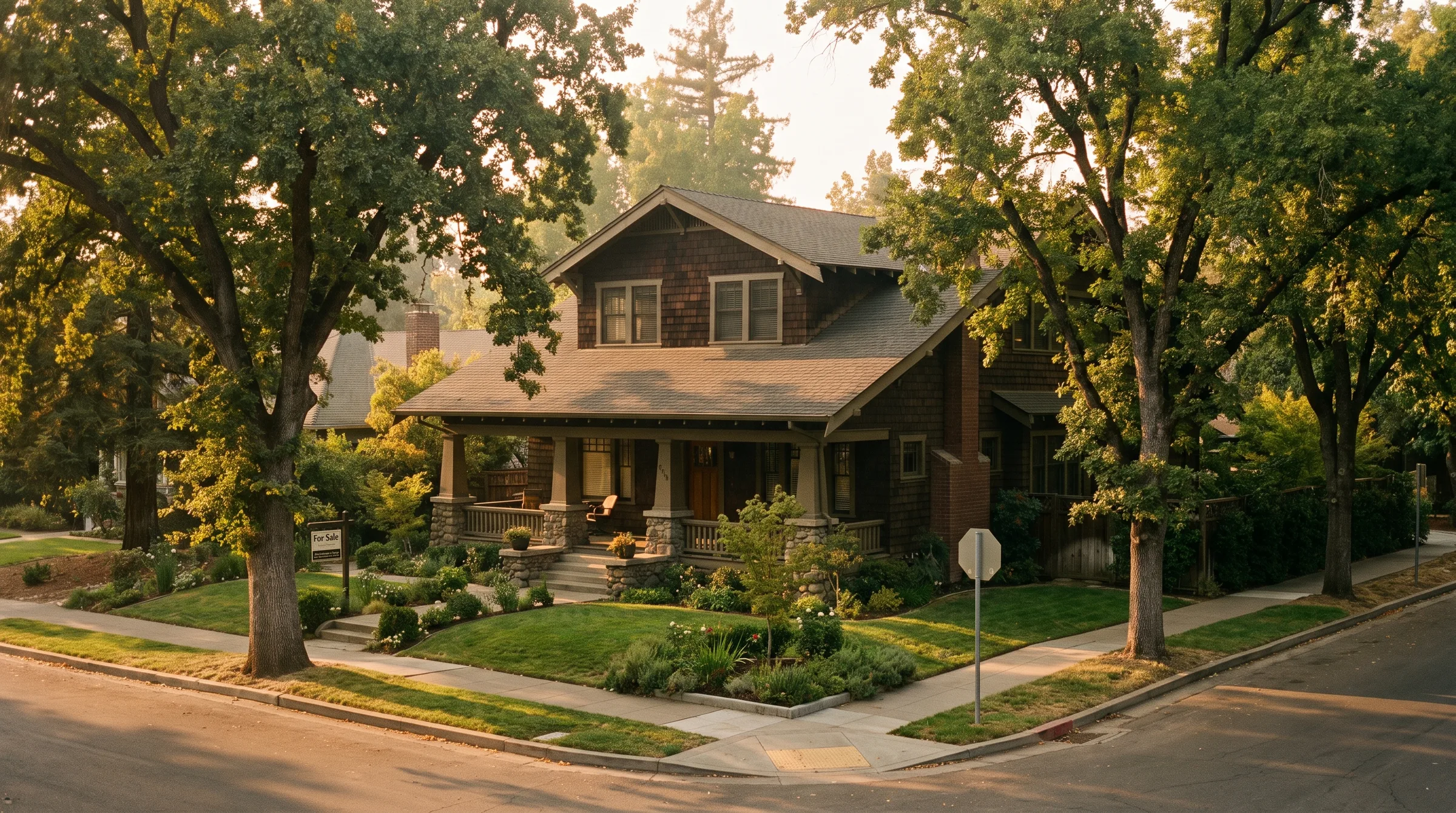
Most inherited homes in Rosemont (95826) are 1960s and 1970s suburban houses, often single-story ranches on quiet streets east of downtown between Rosemont High and the CSUS area. They were built for young families, and many were owned by the same people for forty or fifty years. That long ownership is exactly why the stepped-up basis matters so much here.
Long ownership also leaves its marks. It is common to find original kitchens and bathrooms, older electrical panels, aging roofs, dated windows, and garages packed with a lifetime of belongings. A traditional listing usually asks heirs to tackle some of that, or accept that buyers using financing may balk. Every month spent on cleanouts and contractors is time when the home may be appreciating past the stepped-up value.
Darren buys across Rosemont in any condition, as-is, for cash. That means the furniture, the old carport, the original tile, and the overgrown backyard can all stay exactly as they are. For heirs who live out of town or are simply worn out, that can be the difference between a sale that drags into next year and one that wraps up while the tax picture is still simple.
How a Probate Sale Works With the Estate, the Attorney, and the Court
If you need to sell a house in probate in Rosemont, the sale has to fit the court process, and Darren works alongside your attorney and the court rather than around them. The personal representative, the estate attorney, and sometimes the judge all have roles. A buyer who understands that rhythm makes the whole thing calmer for everyone.
Probate real estate in Rosemont often moves on the estate's schedule, not a typical buyer's. Paperwork, authority to sell, and any required court steps have to line up. A cash buyer with no financing contingency removes one of the most common reasons a probate sale falls apart, because there is no lender who can back out at the last moment. Darren can close in as few as 10 days when the estate is ready, or wait for the date your attorney sets.
For a closer look at local timing, see our page on selling a house during probate in Rosemont. Recorded documents such as deeds can be looked up through the Sacramento County Clerk-Recorder, which is often helpful when an estate is sorting out title. Your attorney will guide what the court needs, and Darren will follow that lead.
Listing Versus Selling Direct When Taxes Are on Your Mind
A traditional listing can bring a strong price, but a direct cash sale can bring certainty and speed, and with an inherited home speed has real tax value. A typical listed home in the Sacramento area spends about 33 days on the market, and that is after any repairs, cleaning, and staging are done. For an estate, prep work can add weeks or months before the listing ever goes live.
Then there are the costs. Commissions, listing fees, repairs, and the expense of carrying a vacant house all come out of the estate's proceeds. A buyer whose loan falls through can send you back to the start. With Darren, there are no commissions, no showings, and no financing contingency, and he covers standard closing costs. You compare the net numbers, not just the headline price.
Darren will give you a fair, no-obligation number either way. Some families take it. Others use it as a benchmark and decide to list. Both are fine. As a licensed California broker, DRE #01295232, he can talk through the trade-offs honestly, because the goal is for you to make the choice that serves the estate and the heirs.
Questions to Bring to Your CPA Before You Sign Anything
The smartest move before selling an inherited Rosemont home is a short conversation with a tax advisor who can confirm your stepped-up basis and your likely gain. Darren encourages every seller to do this. The general rules are well understood, but your situation, the estate's structure, and how the property passed to you all matter.
Here are useful questions to raise in that meeting, so you walk out with real answers instead of worry:
What is the date-of-death market value, and how should it be documented?
How will any appreciation since the date of death be treated if we sell now versus next year?
Does the way title passed, through probate or a trust, change anything for us?
Are there California filing considerations we should plan for?
Should multiple heirs report their shares separately, and how?
Would living in the home first change our options, or complicate them?
Federal and California Rules Worth Knowing in Plain Terms
Capital gains on an inherited house in Rosemont are generally shaped by both federal rules and California rules, and the stepped-up basis is the starting point for most heirs. The IRS explains the basics of how gains are taxed in IRS Topic 409 on capital gains. California's own tax agency, the California Franchise Tax Board, is the place to look for state-level guidance.
Darren will not quote you rates or promise outcomes, because those belong with your CPA. What he can say from decades of buying homes from Sacramento families is that the fear usually outweighs the reality when a home sells reasonably close to the date of death. Our statewide overview of capital gains tax on inherited property in California gathers the general concepts in one spot.
Heirs sometimes also wonder about property tax if they keep the home rather than sell it. That is a separate question from capital gains, and it has its own rules. Your advisor can help you sort out which issues apply to your plans, so you are not trying to solve every tax question at once.
How Rosemont Compares With Nearby Sacramento Neighborhoods
Rosemont sits in a sweet spot for heirs: its homes tend to sell near the regional median, so a fair cash offer can be judged against a clear benchmark. That predictability helps when several siblings need to agree, because it is easier to trust a number that lines up with what the market is doing.
Families in nearby communities face similar questions with their own local wrinkles. If you have relatives weighing a home farther east, our page on capital gains on an inherited house in Rancho Cordova covers that area. Closer to the south side, see capital gains on an inherited house in Fruitridge. The stepped-up basis works the same way, but housing eras and condition differ.
In Rosemont specifically, the combination of decades-long ownership and dated 1960s and 1970s construction is what makes the step-up and an as-is sale fit so naturally together. If you want more neighborhood detail, our page on selling an inherited house in Rosemont goes deeper into the local picture.
Taking the Next Step Without Pressure
The easiest way to know your options is to get a real number, and Darren will give you one with no obligation. A retired Air Force veteran who has bought homes around Sacramento for more than 30 years, he believes in straight answers and keeping his word. Whether your Rosemont house is spotless or stacked to the ceiling, he will look at it honestly.
You can call Darren directly at (916) 300-7962. There is no middleman and no national buyer passing your file around. You talk to the person who will actually buy the house, and he will coordinate with your attorney, the estate, and the court so that each piece lines up.
If you are still early in the process, our main hub on probate and inherited home sales is a good place to read at your own pace. When you are ready, a short conversation can clarify the tax timing, the probate steps, and the price, so the house that holds your family's memories is handled with care.